
In Memoriam: Remembering Our Geothermal Pioneers
In recognition of their lasting impact, Geothermal Rising will honor members we have lost in recent years through the GRC In Memoriam, which will be featured in conference materials and on the official conference website. If you would like to recognize a Geothermal Rising member who passed away in 2024, 2025, or 2026, we respectfully invite you to complete the In Memoriam Submission Form.
Geothermal Rising presents an In Memoriam section to recognize those who have made lasting contributions to our community. Colleagues, friends, and family members are invited to submit a short remembrance and photo to be included in this year’s tribute. Each honoree is recognized on this page with their photo and a personal write-up that celebrates their legacy.
Thank you for helping us honor the lives and contributions of those who have helped shape our shared geothermal future.
Right-click and open a new tab or window to be directed to the process form HERE
Contact Kam Noren (Kam@geothermal.org) if you have any questions.
Thank you for taking the time to submit an In Memoriam tribute. We sincerely appreciate your contribution in helping us honor and remember the individuals who have made a lasting impact on the geothermal community. Your submission will be received and will be thoughtfully included as part of the GRC In Memoriam, which will be shared in conference materials and on the conference website. These tributes serve as an important reflection of the dedication, passion, and legacy of those who have helped shape our community. Thank you again for helping us recognize and celebrate the lives and contributions of our colleagues.
Contact Kam Noren (Kam@geothermal.org) if you have any questions.
Dr. Blackwell was a major proponent of the commercialization of geothermal energy – a renewable resource derived from the heat that originates from the Earth’s interior. A founding member of the Geothermal Resources Council (now Geothermal Rising), Blackwell also played an important role with the creation of the International Geothermal Association. His leadership in developing the U.S. Department of Energy's National Geothermal Data System continues to impact the development of geothermal energy to this day.
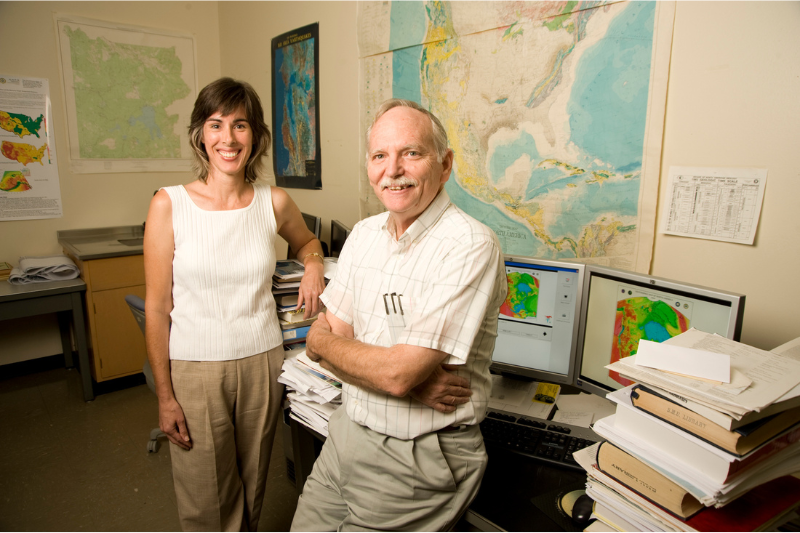
Geothermal industry expert Walter “Dick” Benoit notes that Blackwell’s research helped develop a detailed understanding of complex temperature profiles in geothermal systems and introduced the concept of how the temperature profiles change with time in dynamic geothermal systems. Blackwell’s legacy, he said, is carried by his students, the attendees of workshops that he hosted over the life of his career, and through the SMU Geothermal Database, the primary geophysical data set that the geothermal industry first looks to acquire in assessing geothermal prospects in the United States.
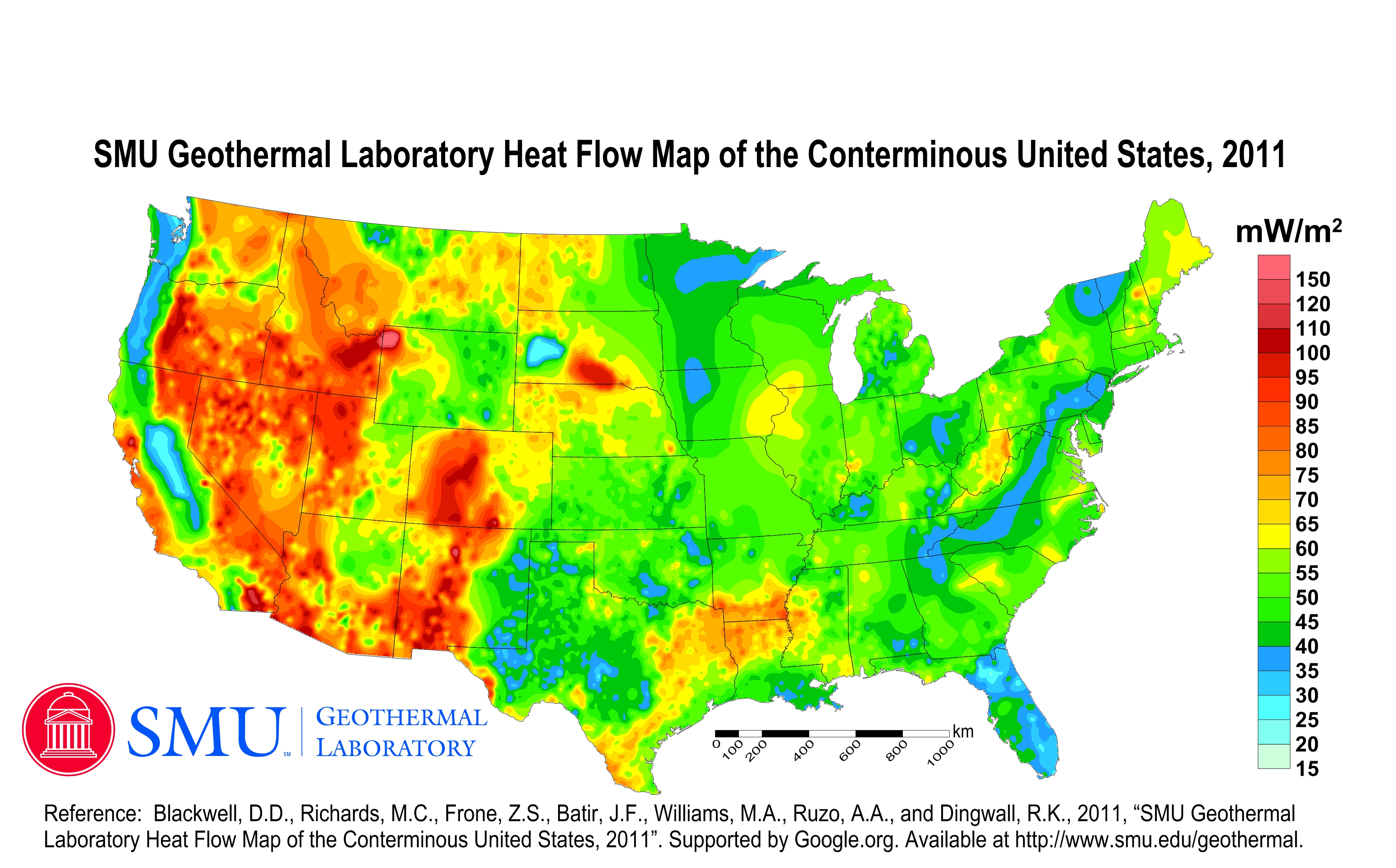
Blackwell’s legacy includes two maps representing major contributions to the earth sciences: the Geological Society of America’s Decade of North American Geology (1992) Geothermal Map of North America and the American Association of Petroleum Geologist’s Geothermal Map of North America (2004). In 2004, the detail of the original map was dramatically increased by including data from oil exploration of sedimentary basins and again in 2011 for the continental USA. These maps and the related databases stored at SMU still provide the foundation future work on the thermal structure and the economic potential of the crustal heat.
Blackwell earned a B.S. in geology and mathematics at SMU in 1963, followed by M.S and Ph.D. degrees in geophysics at Harvard University by 1967. He completed his dissertation work under the direction of geophysicist Francis Birch, a seminal figure in the history of solid Earth geophysics. A member of the SMU faculty since 1968, he served as chair of the Department of Geological Sciences (now Earth Sciences) from 1982-1986.
Blackwell is renowned for his studies of the thermal structure of the continental crust. In his Ph.D. dissertation, he measured temperature/depth profiles in mining bore holes in the western United States along with thermal conductivities of rocks from the same drill holes. His Harvard graduate student colleagues, Robert Roy and Edward Decker, pooled their data from similar research projects to join him along with their advisor Francis Birch on an influential 1968 paper presenting 138 new heat flow measurements for the United States, a major achievement for its time providing the road map for all future continental heat flow determinations.
Starting in 1968, the Harvard group (Birch, Blackwell, Decker and Roy) in different combinations recognized the relationship between surface heat flow and radioactive heat production. Blackwell’s early work showed that the heat flow out of the continental crust was mixture of deeply-sourced heat (the whole Earth) and shallowly-sourced heat in equal or greater proportions from in situ shallow crustal radioactivity.
Blackwell’s dissertation work on heat flow in continental crustal rocks was taking place in parallel with the plate tectonic revolution and exploration of Earth’s ocean basins. Geophysical data collected from the seafloor indicated that the oceanic crust operated much differently than the continental crust; heat flow data for the oceans became one of the fundamental pieces of evidence for plate tectonics. His work on the thermal structure of sedimentary basins, the Pacific Northwest basalt flows, Cascades and the Basin and Range province of the western USA is important for understanding the origin of oil and gas and geothermal systems, a renewable source of future clean energy.
From 2006 to 2018, Blackwell and his colleague, Maria Richards, began a series of nine conferences hosted by the SMU Geothermal Laboratory that promoted the potential of geothermal energy covering topics on the science, the technology, public policy, the law, and finance.
Blackwell was a fellow of the Geological Society of America. He supervised two dozen graduate student dissertations with students going on to have careers in industry, government laboratories, and academia as well as numerous undergraduate students.
Submitted by Maria Richards
Raffaele Cataldi was a geologist of the first wave of scientists who greatly contributed to the growth, development and spreading of the geothermal energy potential and worldwide. He died July 08 2025, at the age of 91. He spent his entire career at ENL starting as field geologist and later reaching managing positions of responsibility.

He was proponent of the early geothermal exploration in Italy. In the early 1970s, he was the founder the Geothermal research at International Institute for Geothermal Research and complementary Geothermal Research Center at ENEL where guidelines and research criteria were defined for exploration and cultivation of geothermal fields.. Cataldi is among the founders of IGA, of UGI and member of the first international board of the GRC. His vision, energy, and passion have been a great inspiration to all of us. Cataldi has promoted geothermal energy for sixty years, highlighting its benefits, potential, and critical issues with great professionalism and transparency. He supported the development and technological innovation for the exploitation of unconventional resources, contributed to the scientific and industrial evolution of the field and, as an expert, also addressed the historical, social and cultural aspects of geothermal energy. Cataldi was a consultant to the Italian government, the United Nations, and the European Union. He is also the author of hundreds of scientific papers and numerous books for schools. His work produced together with Muffler et al., represent a milestone in international geothermal history. At the World Geothermal Congress in Melbourne 2015, he received a special award from IGA, on the 25th anniversary of its foundation. Cataldi is remembered with deep respect and affection by friends and colleagues for his professionalism, humanity, and generosity. His example and his sincere, passionate, and altruistic spirit will continue to guide and inspire the Italian and international geothermal community.
Submitted by Rina Bartalini