
Advancing with the Heat in Geothermal Drilling Fluids
When commercial geothermal projects accelerated in the late 1970s and 1980s, most development focused on high-permeability hydrothermal reservoirs. Wells were hot and sometimes sour, but depths were moderate, and bottom-hole temperatures, while challenging, sat within the performance envelope of many oil and gas drilling fluids.
Sinclair entered the market during this period with a specific focus on geothermal drilling fluids. Unlike generalist service companies that shifted in and out of geothermal as commodity cycles changed, Sinclair built its business almost entirely around high-temperature, high-enthalpy projects. Over time, that narrow focus became an advantage. The company accumulated a library of mud reports, treatment records, and loss-control case histories across dozens of fields.
As developers drilled deeper and chased hotter rock, early fluid systems began to show their limits:
- Standard polymers lost viscosity at elevated temperatures.
- Conventional lost-circulation materials struggled in wide, thermally stressed fractures.
- Wellbore stability became harder to maintain in crystalline rock and highly fractured formations.
These challenges pushed geothermal fluids away from simple adaptations of oil and gas systems toward purpose-built formulations for high-temperature and extreme-loss environments.
The first major shift came with the adoption of synthetic, high-temperature polymer systems designed to retain rheology after prolonged exposure to elevated bottom-hole temperatures and repeated circulation cycles.
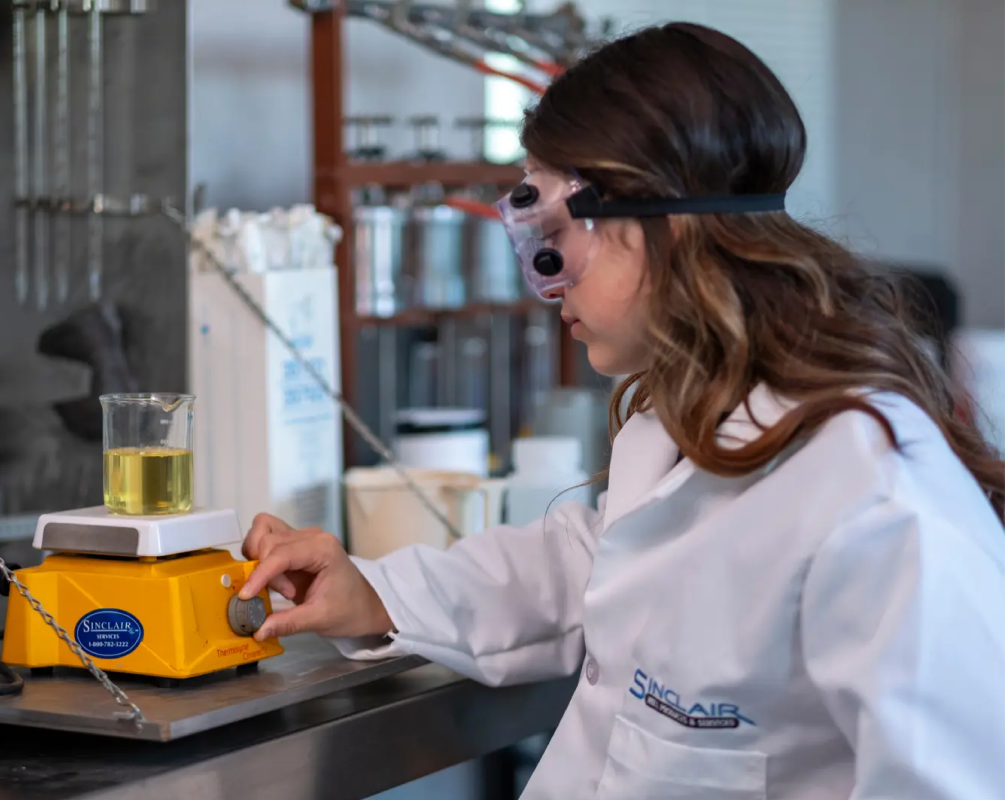
Sinclair and other geothermal specialists began to:
- Qualify polymers in autoclave tests that approximate downhole conditions rather than relying solely on surface-temperature properties.
- Combine temperature-stable polymers with carefully chosen weighting agents to maintain density without compromising rheology or filtration.
- Use brine-based or mixed-salt systems aligned with reservoir chemistry to reduce scaling and minimize damage.
At the same time, lost circulation was becoming a defining issue, especially as wells entered naturally fractured formations and the crystalline basement. Severe losses could consume large volumes of fluid, add cost, and increase nonproductive time.
The response included:
- Engineered blends of granular, fibrous, and flake materials tailored to specific fracture apertures.
- Staged lost-circulation “ladders,” where pills were designed with increasing particle size ranges to bridge a wider spectrum of loss pathways.
- Close coordination between fluid design and cementing plans to ensure that remedial squeezes and isolation jobs would remain compatible with the drilling fluid system.
In many fields, these approaches enabled operators to drill intervals that had previously required repeated sidetracks or lengthy cure periods.
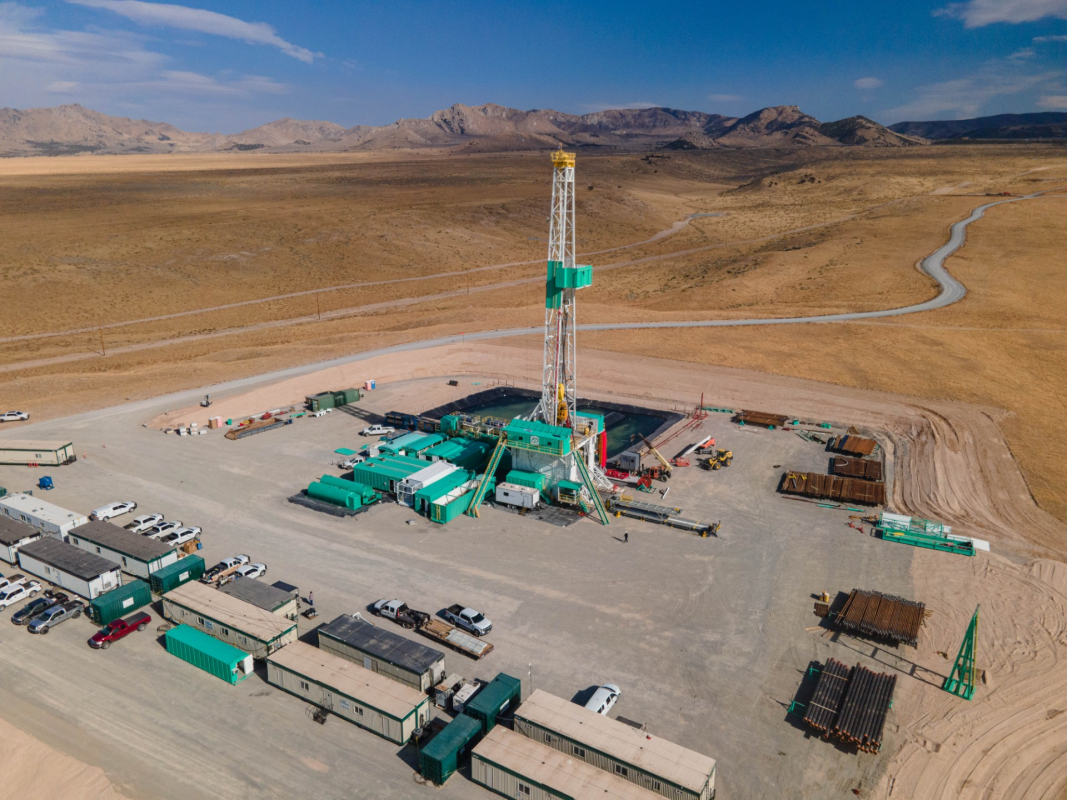
The U.S. Department of Energy’s Frontier Observatory for Research in Geothermal Energy (FORGE) site in Milford, Utah, marked a significant turning point in geothermal drilling practice. Instead of targeting a naturally productive hydrothermal reservoir, FORGE focused on creating and characterizing an engineered reservoir in hot, low-permeability crystalline rock.
Sinclair served as the dedicated provider of geothermal drilling fluids for the FORGE wells. The project demanded a combination of temperature performance, low formation damage, and robust loss-control capability in granite and other crystalline lithologies.
Several key lessons emerged.
Temperature margin as a design requirement
Bottom-hole temperatures and circulating times at FORGE pushed fluid formulations close to their limits. Lab screening focused on polymers and fluid-loss additives that could withstand exposure to elevated temperatures for extended periods without severe thinning or breakdown. Operationally, this allowed crews to maintain hole cleaning during long static periods for data acquisition or stimulation work.
Lost circulation as a design condition
In crystalline basement, natural fractures are common and often intersect at high-pressure differentials. Rather than treating every loss as an unforeseen challenge, the FORGE program incorporated pre-planned loss-control strategies. Sinclair deployed staged treatments and customized blends based on field diagnostics, helping to maintain sufficient hydrostatic head while limiting total fluid losses.
Data continuity and iterative improvement
Because the same fluids team supported multiple wells and phases, treatment records, return volumes, and condition monitoring from early operations could feed directly into later wells. That continuity shortened learning cycles and improved confidence in how the systems would behave as the project advanced.
The systems and practices proven at FORGE are now informing drilling-fluid design for a growing set of commercial EGS ventures and technology spin-outs that trace their origins to the Milford program.
As EGS and SHR concepts move from pilot projects toward larger developments, drilling fluids face an even steeper set of requirements. Wells may target hotter rock, tighter formations, or both. Some SHR designs anticipate conditions where circulating fluids will be exposed to supercritical or near-supercritical environments.
Drawing on FORGE and earlier international work, Sinclair has focused on three broad themes for these next-generation wells.
Temperature survival beyond conventional limits
Fluid systems are screened for both short- and long-term thermal stability, including heating and cooling cycles as operations move between drilling, conditioning, and stimulation. High-temperature polymers, stabilizers, and carefully chosen base fluids are combined to maintain rheology while minimizing degradation products that could plug fractures or damage tools.
Wellbore integrity in engineered reservoirs
EGS and SHR wells rely heavily on long-term integrity of the wellbore and the near-wellbore region. Drilling-fluid design is coordinated with cement systems and with anticipated stimulation treatments. The goal is to maintain borehole support while limiting chemical interactions that might weaken cement or alter fracture geometry in unintended ways.
Lost-circulation strategies for extreme conditions
Severe, total, and cyclic losses are expected rather than exceptional in many EGS and SHR settings. Engineered lost-circulation designs for crystalline rock are being adapted to anticipated fracture networks in new project areas, including regions under evaluation in Oregon and other western U.S. states. Emphasis is placed on materials that remain stable at high temperatures and do not compromise future stimulation or production.
Across these themes, much of the value lies not in any single product but in the accumulation of field experience and lab data that allows fluid systems to be tuned for each new prospect.
Service participation in geothermal has often mirrored commodity cycles in oil and gas. When oil prices are high, many providers are fully occupied; when prices fall, geothermal suddenly looks attractive again. The result can be an intermittent presence, making it hard to sustain specialized expertise.
Sinclair’s business model has been different. With geothermal drilling fluids as a central focus since the 1970s, the company has remained active through multiple market cycles. That continuity has practical consequences:
- Historical mud data and performance records are available when operators return to a field after many years.
- Lessons learned in one campaign can be carried forward to subsequent wells rather than being relearned from scratch.
- Research investments in polymers, loss-control blends, and high-temperature testing feed directly into live projects instead of being shelved between cycles.
For developers planning multi-well EGS or SHR campaigns, long-term technical partners in drilling fluids and other critical services can be as important as the rig or the drilling program itself.
The story of geothermal drilling fluids over the past four decades is a story of steady adaptation to higher temperatures, more fractured formations, and engineered reservoirs.
Sinclair’s work from early hydrothermal projects through FORGE and into emerging EGS and SHR efforts illustrates several principles the wider community can apply:
- Design fluids for the end state, not just the first well. Anticipate how temperature, chemistry, and losses will evolve across a campaign.
- Treat high temperatures and severe losses as design conditions. Build strategies and testing protocols around them, rather than reacting only when problems arise.
- Value continuity of expertise. Long-term specialty providers can shorten learning curves and reduce both technical and financial risk for ambitious new projects.
As geothermal developers aim for scalable EGS and superhot rock assets, drilling-fluid innovation will remain one of the quiet but essential enablers. The wells that unlock the next generation of geothermal resources will depend as much on what circulates inside the hole as on the rock they reach.