2025 August Hawaii RIG Discussion
12Noon-1PM Hawaii Time Zone
Symposium Objectives:
The symposium will feature a series of sessions designed to explore the cultural, technological, and environmental aspects of geothermal energy. Attendees will have the opportunity to engage with the latest advancements in geothermal technology, share their experiences and insights, and collaborate on developing strategies that respect and incorporate Indigenous perspectives.
This event aims to create a platform for Indigenous voices to be heard, fostering a global dialogue on the potential and challenges of geothermal energy development in Indigenous territories.
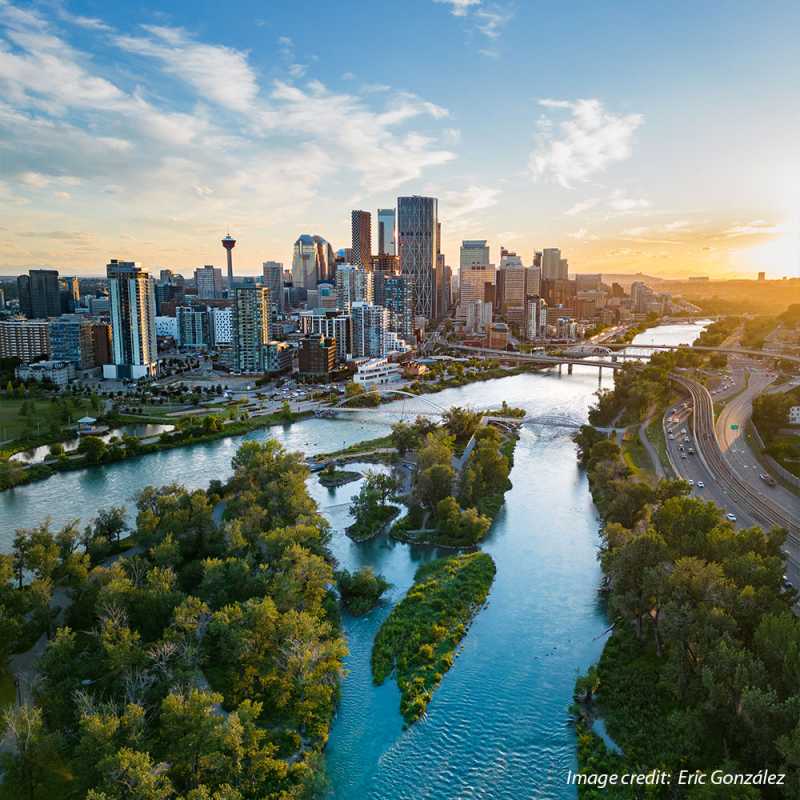
The symposium immediately precedes the 2026 World Geothermal Congress (WGC) hosted by the International Geothermal Association (IGA). All symposium participants are welcome to attend the 2026 WGC in Calgary, Canada.

Join us in supporting the Indigenous Geothermal Symposium and help make a difference by fostering meaningful dialogue between Indigenous communities and the geothermal sector. Your donation empowers Indigenous voices, strengthens collaboration, and advances a more inclusive geothermal future. Your generosity makes it possible for participants traveling from all over the world to attend - offsetting essential costs for travel, lodging, and registration.

The Event Fee is $25 per person
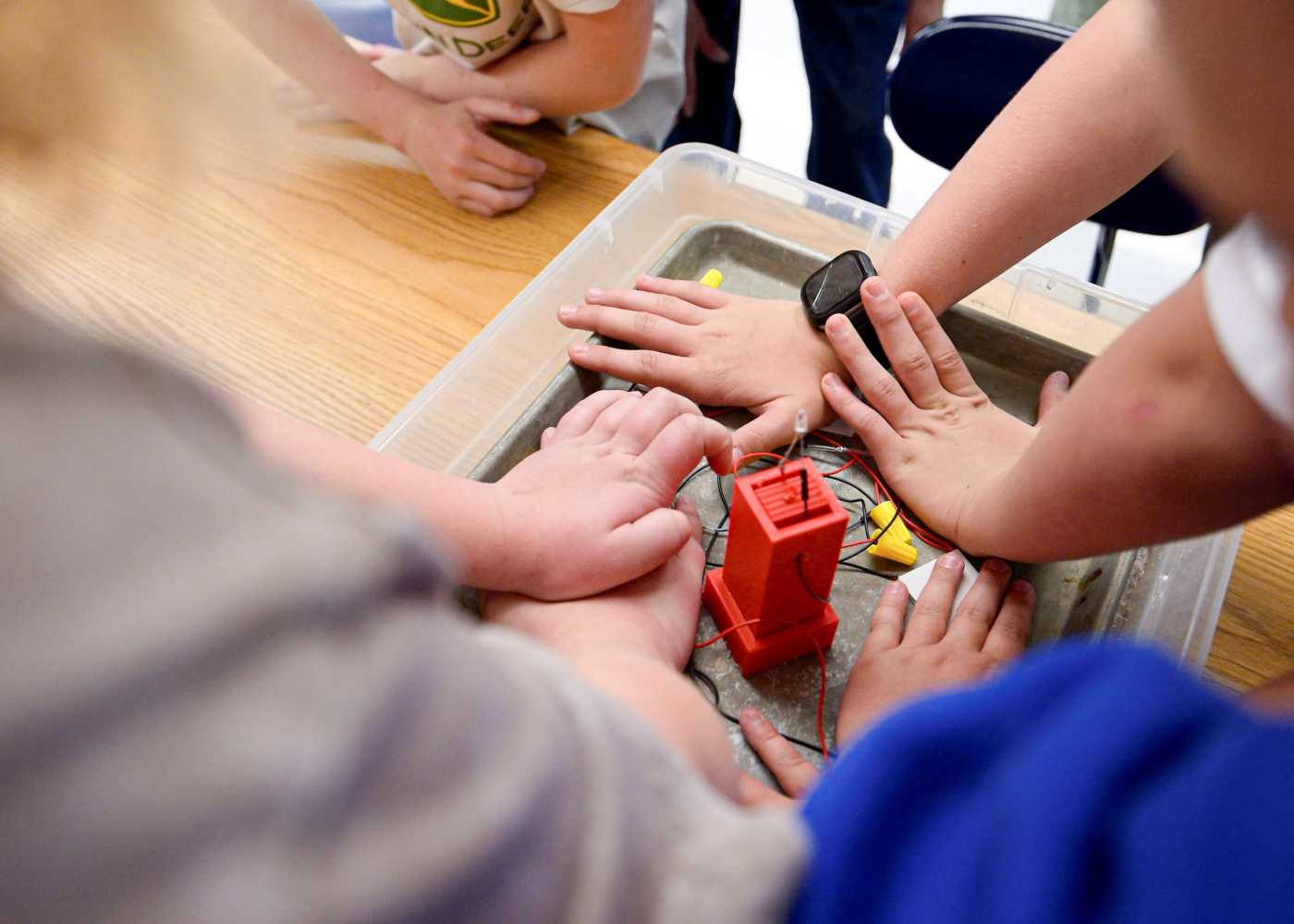
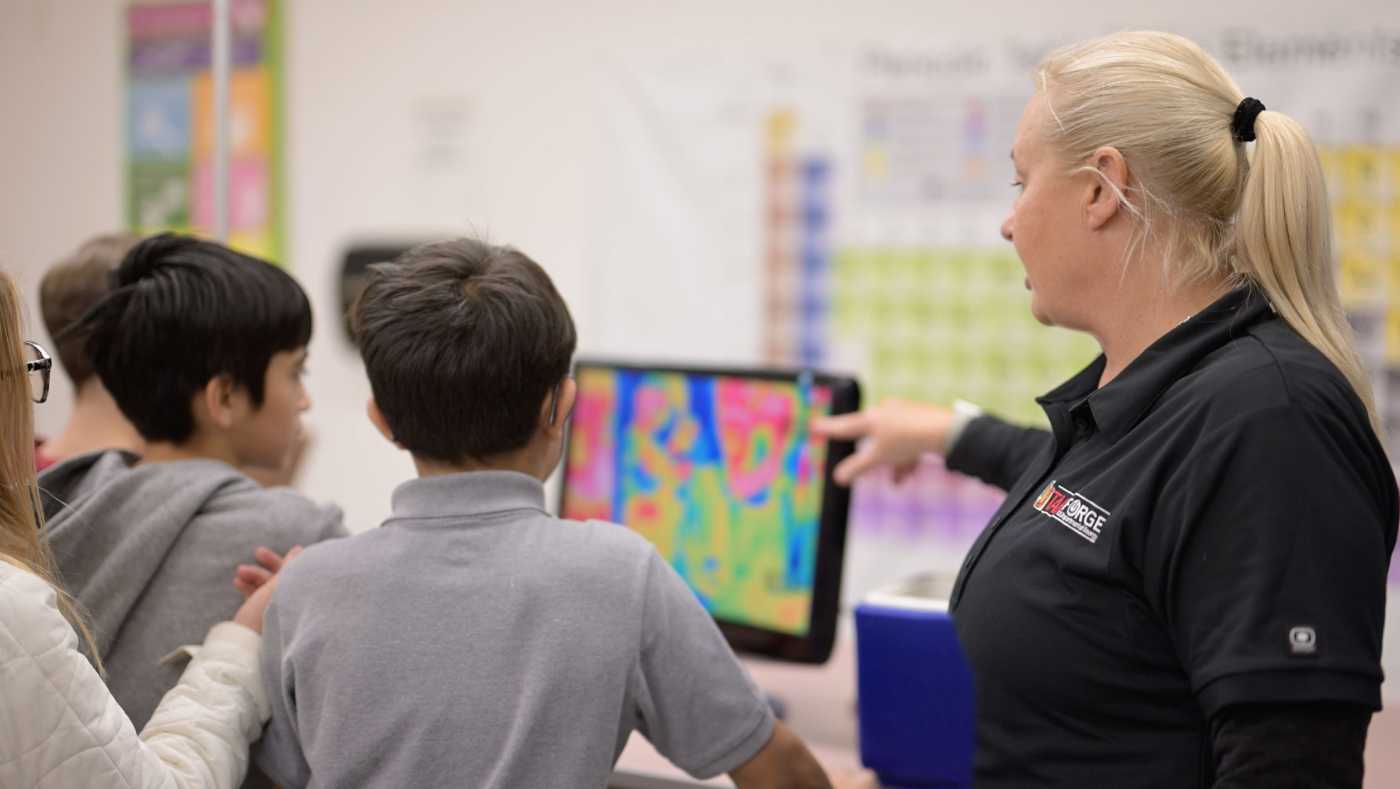
We reached out to Christoper Katis and Gosia Skowron, who lead the Utah FORGE Outreach and Communication Team, to discuss their very popular classroom visits. When this school outreach began in 2021, the Team focused on 4th-5th graders; they have now expanded to middle and high schoolers. At first exclusive to Beaver County, where the Utah FORGE wells are drilled, they have now reached nearly 50 classrooms statewide, and even spoke to a group of home-schooled rural students. (Photo Credit: Eric Larson, Flash Point, SLC)
Each class visit starts with an age-appropriate presentation to introduce everyone to the concepts of geothermal energy, followed by hands-on experiments. Christopher and Gosia believe that using tactile and visual demonstrations engage students’ curiosity, and their most popular demonstrations are:
For more information on fun ways to teach geothermal visit the Utah FORGE website: https://utahforge.com/teacher-resources/
Utah FORGE’s program introduces young learners to topics outside of their typical curriculum. Their goal isn’t just to raise awareness, but also to spark questions and encourage critical thinking. Energy sources and usage is a topic that impacts their local communities, and is also a global scale concern.
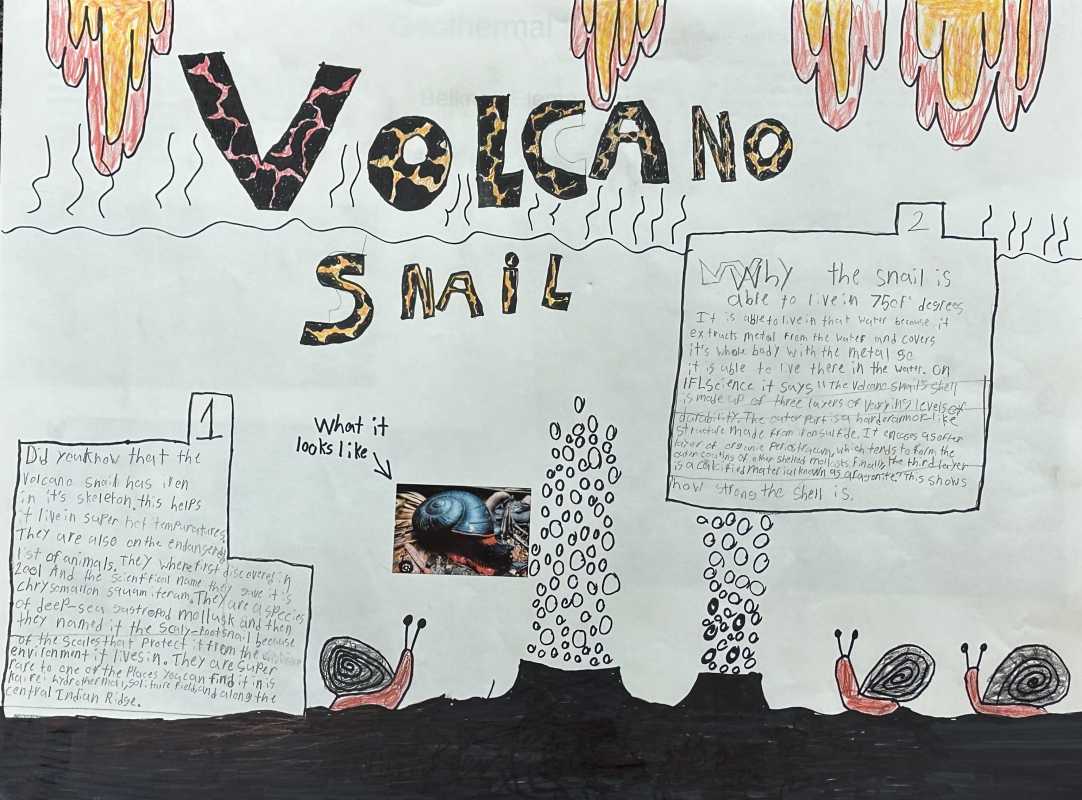
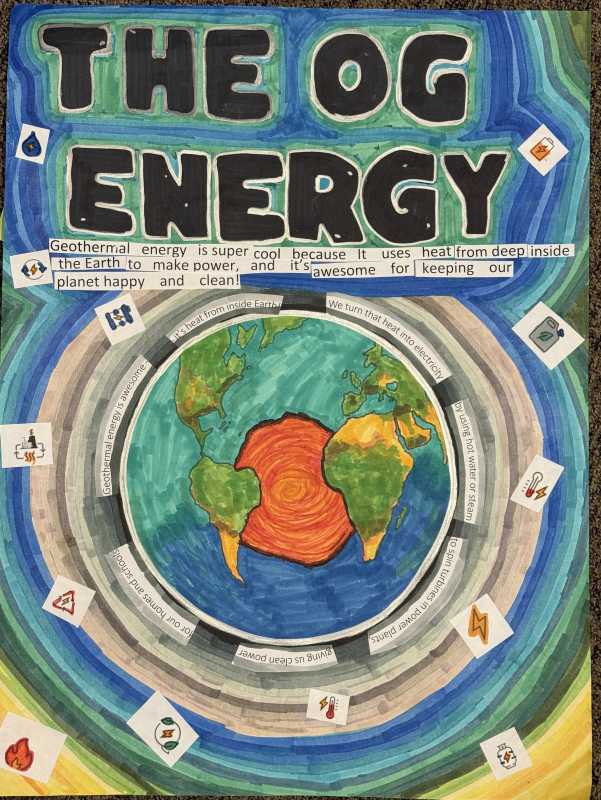
In elementary classrooms, outreach efforts include a popular poster contest, where students research and illustrate a geothermal topic of interest. Did you know that bananas grow in Iceland and there are metal plated snails that live on underwater volcanoes in the Indian Ocean? The youth of Utah do and they’re making award winning art about it! The winning entries are celebrated at school and displayed in local libraries, reinforcing a link between science learning and community pride.
Inspired by the efforts to turn STEM into STEAM, a song parody contest was introduced to incorporate creative thinking into STEM teachings. It offers students a refreshing new way to look at the energy problems around them. Song parody competitions harness students’ creativity and challenge them to write and perform original lyrics to a well-known song. (check these out!): https://utahforge.com/outreach/song-parody-contest/
What’s the secret to such a successful program? Christopher and Gosia were emphatic: You have to be there - in the community! Attend the county fair and town hall meetings, be available to answer questions, and be a resource. When you become part of the community everyone from the local librarian, county commissioners, and young learners get excited about geothermal. Equally important, is to expand beyond the obvious reach and broaden the audience from legislators to AP physics students, from Chambers of Commerce to Universities across the state.
We’re glad to see students embrace learning and fun at the same time and only hope to foster more of it in the future. In the 2025–26 school year, Utah FORGE’s outreach efforts will look to continue expanding the program further to more public, private, charter, and rural schools across the state.
Read more about Utah FORGE’s community engagement work in this technical paper:
Best Practices for Community Engagement and Stakeholder Involvement – Case Study at Utah FORGE. https://publications.mygeoenergynow.org/grc/1034828.pdf
The GR Workforce Success Group believes that building real and lasting relationships with the communities where geothermal technology is developed will help to advance the industry. This might be by fostering an interest in geothermal, developing local talent, building opportunities for collaboration, or ensuring that the benefits of the geothermal good life are shared by all. It starts with a meaningful connection between people.
#Geothermal #Education #UtahFORGE #Community
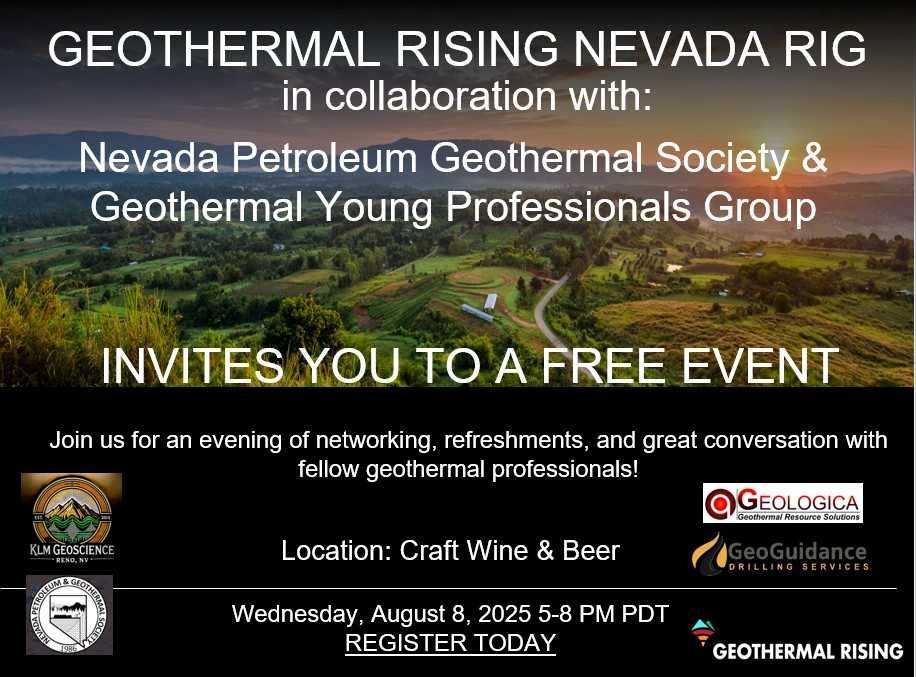
Thank you to our Sponsors:
KLM Geoscience
Geologica Geothermal Group
GeoGuidance Drilling Services
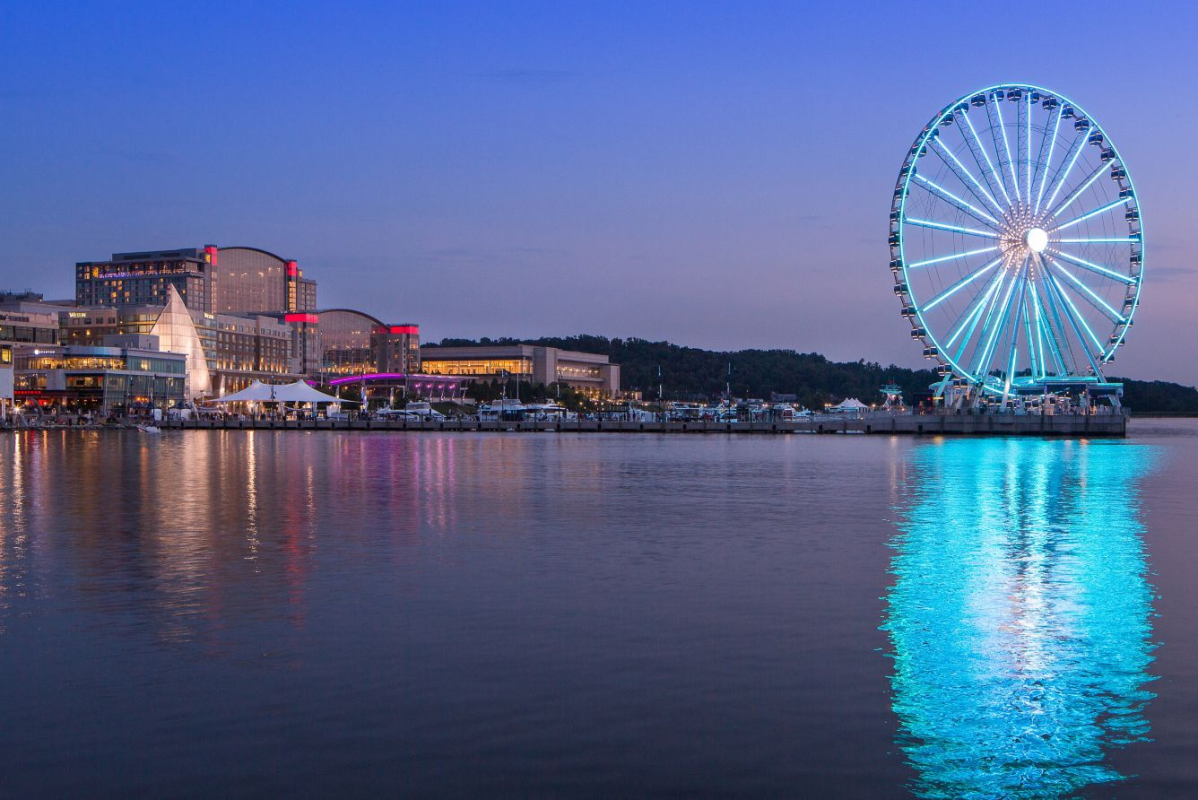
Geothermal Rising is pleased to announce the dates and location for the 2030 Geothermal Rising Conference: Sunday, October 27 - Wednesday, October 30 at the Gaylord National Harbor, Maryland.
Did you know that Smithsonian’s National Zoo in Washington, DC, utilizes Geothermal energy? The Elephant Trails Exhibit currently uses 40 geothermal wells for heating and cooling. The Washington, DC metro area is experiencing a renaissance of low-temperature geothermal projects stimulated by both federal and local tax incentives as well as localities and organizations’ commitment to reliable, sustainable energy solutions.
Nestled just outside Washington, DC, National Harbor is a vibrant waterfront district featuring restaurants, boutique shopping, entertainment venues and plenty of opportunities for fun excursions.
Save-the-date to join us at the Gaylord National Harbor in 2030! The hotel room block will open, along with registration, in Spring of 2030.
Join us for an exciting series of presentations demonstrating the broad range of geothermal research happening at the Pacific Northwest National Laboratory.
Speakers:
Jana Simo: A brief overview of geothermal research at PNNL
Dr. Hunter Knox: Leveraging coda from waveforms generated by a continuous downhole active seismic source system to investigate fracture development during the EGS Collab 1 experiment
Jason Hou: An integrated exploration strategy to identify the subsurface fingerprint of Hawai’i's prospective resources and strategically reduce exploration risk and cost
Nicole Harvey: A feasibility assessment of installing geothermal power plants across the Department of Defense (DoD) enterprise, including the methodology used in the assessment, as well as a discussion of the challenges unique to the department of defense
Please join us for a lively discussion of surface operations in geothermal development. Industry experts will present on a variety of topics, including binary power plant development, ORC technology advancements, transmission processes, and more. A moderated Q&A session will follow the presentations.
Speaker Highlights
Joseph Bonafin (Turboden): technology overview, innovations in Organic Rankine cycle
Justin Schnegelberger & Derek Lester (Burns & McDonnell): transmission & interconnection, supply chain bottlenecks